Wet and electric underfloor heating, heat sources and room controls
PRACTICAL GUIDE
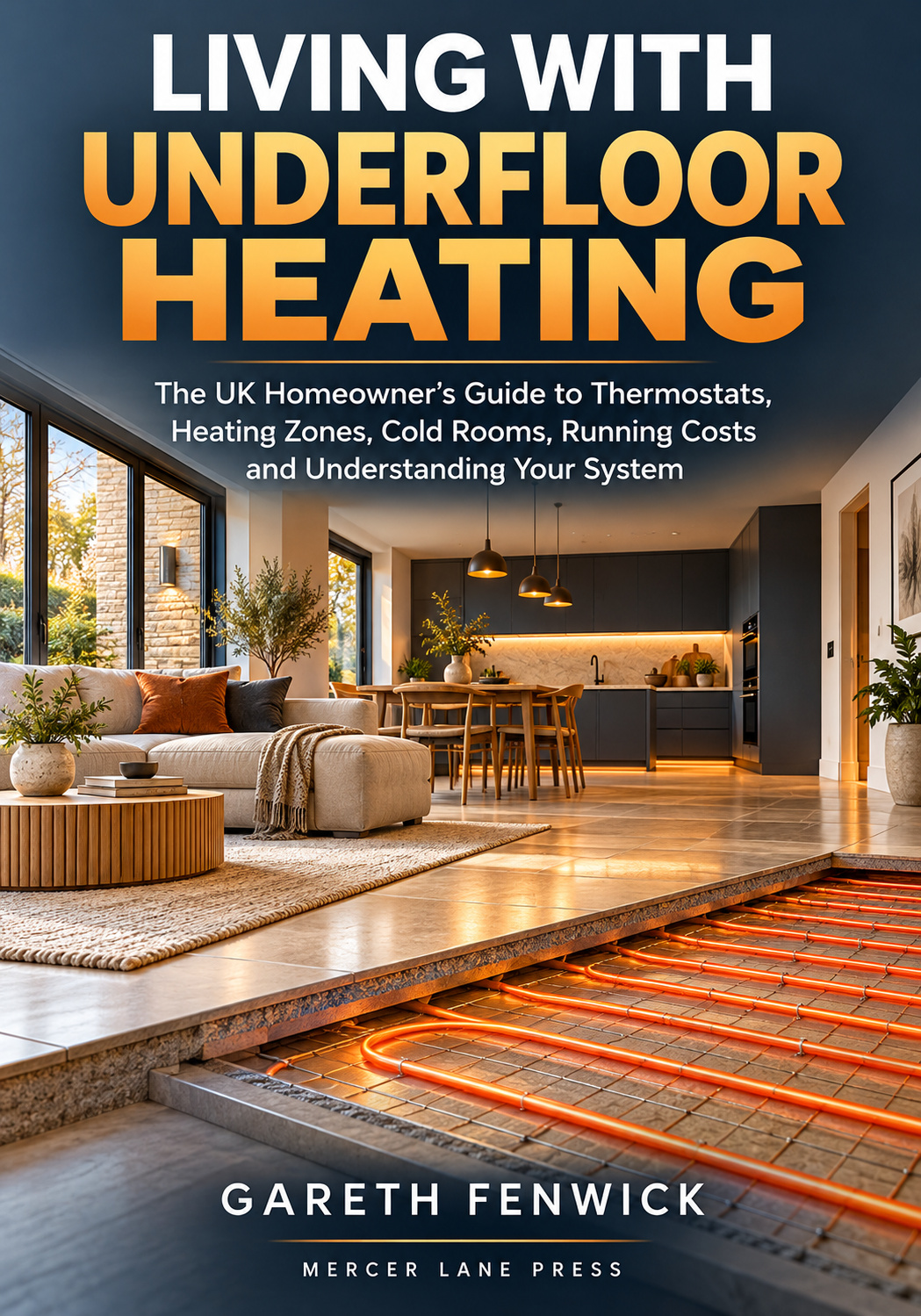
Living With Underfloor Heating
The UK Homeowner’s Guide to Thermostats, Heating Zones, Cold Rooms, Running Costs and Understanding Your System
By Gareth Fenwick · Published by Mercer Lane Press
A practical UK homeowner guide to understanding an existing wet or electric underfloor heating system. Learn what thermostat displays really mean, identify zones and common components, compare warm-up and scheduling behaviour, investigate persistent cold rooms and running-cost questions safely, and prepare useful observations for a qualified professional. Includes a system passport, room-performance log, schedule experiment, billing comparison and handover worksheets.
WHO IT IS FOR
For readers who want a practical, structured way forward
UK homeowners who have inherited, moved into or already live with underfloor heating and want to understand their installed controls, room behaviour, heating bills and safe next steps, without attempting plumbing, electrical work or commissioning.
Problems the book helps you work through
- A floor feels cool even though its room is comfortable, raising unnecessary concern that the heating has failed.
- A thermostat appears to call for heat but a room remains below its chosen air-temperature target.
- One room stays colder than others, or several thermostats and manifold loops do not appear to correspond.
- A slow-response floor reaches comfort later than expected, making conflicting advice about constant heating and setbacks unhelpful.
- A higher energy bill is blamed on underfloor heating without separating space heating, hot water, tariffs and changing weather.
- Missing handover information leaves owners unsure which settings are ordinary user controls and which belong with an installer.
WHAT IT COVERS
Inside the book
Room-air, floor-surface and water-flow temperatures and what they each tell you
Thermostat symbols, sensor modes, schedules, holds and overrides
Zones versus pipe loops, manifold recognition and safe observation
Warm-up time, thermal mass, setbacks and choosing comfort periods
Boiler-fed and heat-pump systems, mixed radiators and floor coverings
PRACTICAL OUTCOMES
What the book is designed to help you do
Identify your heat source, controls, room zones and available handover records without dismantling equipment.
Use the correct thermostat manual to distinguish heat demand, room temperature and floor limits.
Document a cold-room or slow-heating problem with times, actual temperatures, targets and comparable conditions.
Compare heating schedules and bills without assuming that one warmer week proves a financial saving.
Keep an underfloor-heating system passport, room log and a one-page professional brief for future visits.